Disc herniation & sciatica
Burning leg pain, worse with sitting. Most improve in weeks without surgery.
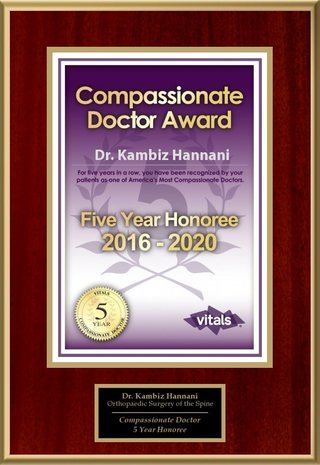
 Top 1% of US doctorsPatients’ Choice 5-Year Honoree (Vitals)
Fellowship-trained spine surgeon · Los Angeles County
A board-certified orthopedic spine surgeon who has treated only the spine since 2002, and who tries every non-surgical option first.
Patient reviews
I believe you would be hard pressed to find someone more skilled or knowledgable. … My spine was slipping at S1-L5 and pinching my sciatic nerve. After the corrective surgery the pain which brought me into the doctor was immediately gone and has not returned. … Highly recommended.
Dr. Hannani is a true specialist. I believe you would be hard pressed to find someone more skilled or knowledgable. He is straight forward, and down to earth. My spine was slipping at S1-L5 and pinching my sciatic nerve. After the corrective surgery the pain which brought me into the doctor was immediately gone and has not returned. The staff across the board from office to hospital were skilled, friendly, and knowledgeable. Highly recommended.
I was dealing with horrible lower back and leg pain but was hesitant to go through with surgery … When I finely went with surgery it was possibly the best decision I ever made. … Now I have no back or leg pain anymore …
Incredibly friendly Doctor and staff. I was dealing with horrible lower back and leg pain but was hesitant to go through with surgery and Dr. Hannani was very accommodating. When I finely went with surgery it was possibly the best decision I ever made. He explained everything thoroughly and the surgery went well. An MRI scan had shown I had a bulging disc pinching my sciatic nerve so surgery was the best option for me. Now I have no back or leg pain anymore and the post op therapy has helped me get back to a normal routine. I am confident I wouldn't have found a better Doctor who was understanding and let me try out other treatment plans when I was a bit worried to go through with surgery. Ultimately that decision turned out for the best and I can continue living normally without any pain.
After a year of physical therapy, chiropractor and acupuncture it was determined that I needed cervical spine surgery. … I had 4 level cervical fusion spine surgery … very thorough and precise; clearly an expert in his field. … Although I'm still healing, I can say that the surgery has made a difference …
After a year of physical therapy, chiropractor and acupuncture it was determined that I needed cervical spine surgery. The first surgeon I encountered literally had me terrified!!! Luckily I opted for a second opinion and was referred to Dr. Hannani. What a difference ....a relief!!! After meeting with him all my questions and concerns were answered in full detail. I decided to go through with the surgery and September I had 4 level cervical fusion spine surgery with metal plates put in. Dr. Hannani is very thorough and precise; clearly an expert in his field. He also good bedside manner which is something that is appreciated at times such as this. Although I'm still healing, I can say that the surgery has made a difference..... thank you Dr. Hannani.
Free online MRI review · Second opinion from home
Already have an MRI? He looks at the actual images himself, not only the report. Start with whichever is right for you.
Send your MRI from home, plus a complimentary telemedicine visit (15 minutes) with Dr. Hannani to go over it.
Start free MRI reviewA full exam and consultation at our West Covina office. Most commercial and PPO plans, Medicare, workers’ comp, work-injury and personal-injury cases; affordable payment plans if you have no coverage.
Book an in-office consultation W 1200 L 600Example image
Insurance & payment
Questions about coverage? Contact UsStart with a free MRI review
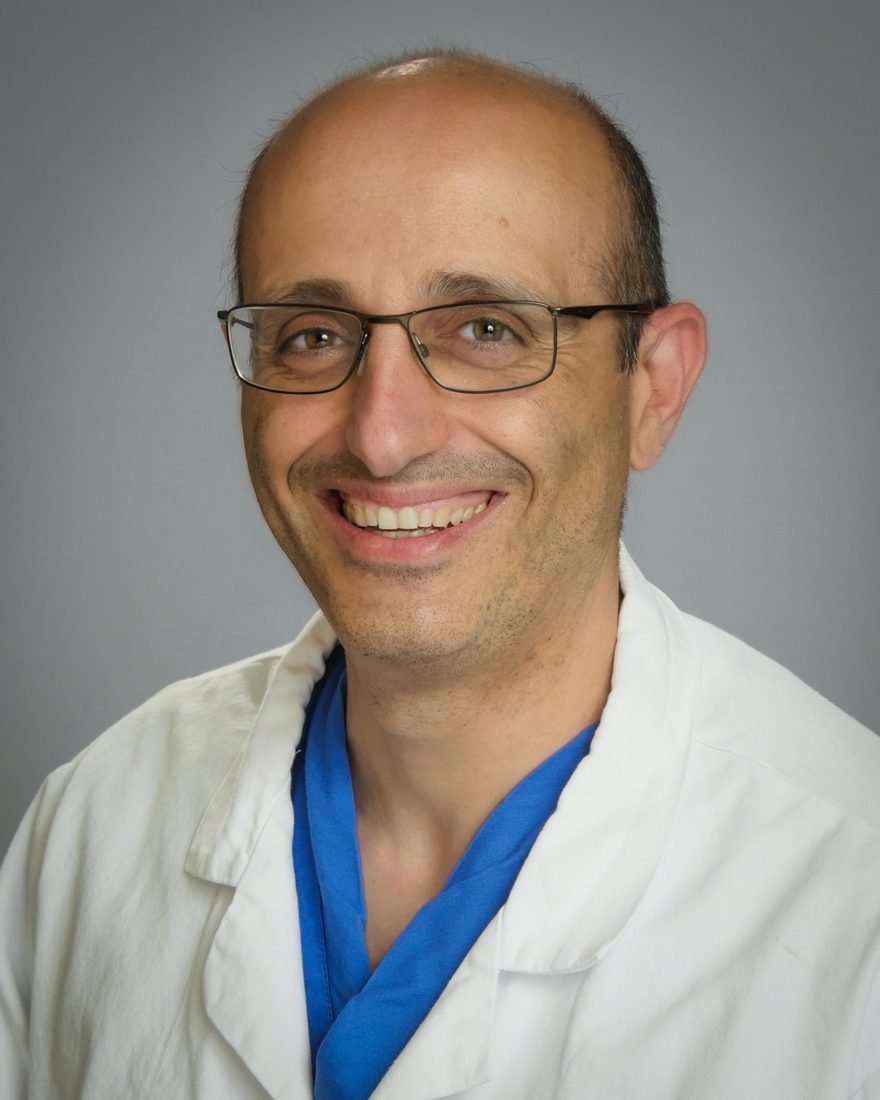
About Dr. Hannani
Dr. Hannani tries every non-surgical option first. If problems persist, he offers the least invasive procedure possible, using current, research-backed techniques. Surgery is the last option, never the first.
“Our facility only treats spinal problems.”
One of few spine surgeons who operate under light sedation with local anesthesia, so patients stay awake, can talk with Dr. Hannani during the procedure and can confirm their pain relief on the table.
Disc surgery through a ~1/4-inch incision under light sedation with local anesthesia, without removing normal muscle or bone.
Not every case is the same. Open and reconstructive surgery are offered when minimally invasive is not right.
Computer navigation and robotics, under the surgeon’s control, help place pedicle screws and implants along a planned path, often through smaller incisions.
Conditions
Burning leg pain, worse with sitting. Most improve in weeks without surgery.
Disc and bone spurs pressing on nerve roots, causing pain, numbness or weakness.
Leg pain that worsens with standing or walking and eases with sitting.
One vertebra slipping on another; degenerative or isthmic.
Mainly low back pain from a worn, dehydrated disc.
Spinal cord pressure affecting balance and hands. Needs prompt evaluation.
Wear-and-tear of neck joints and discs.
Often from osteoporosis, sometimes without a fall.
Procedures
Light sedation with local anesthesia, so you stay awake and can talk with Dr. Hannani. A camera and fine instruments remove the herniated disc. Usually home the same day.
Minimally invasiveRemoves the piece of disc pressing on a nerve, under a microscope, for sciatica that has not improved.
Minimally invasiveCervical and lumbar. Preserves motion; often suits younger patients with disc degeneration.
Motion preservingSmall incision at the front of the neck; disc removed, bone graft and titanium plate placed.
NeckRemoves arthritic bone and thickened ligament to relieve pressure on nerves in stenosis.
Low backFront, back or combined approaches. Always considered a last resort.
ReconstructionA balloon restores the height of a fractured vertebra, then cement stabilizes it. About 45 minutes per level.
FractureNon-surgical care comes first: physical therapy, medications, epidural steroid injections and regenerative medicine (PRP). See every page on the site.
Videos · 12 in the library
Anatomy, causes, MRI findings and care.
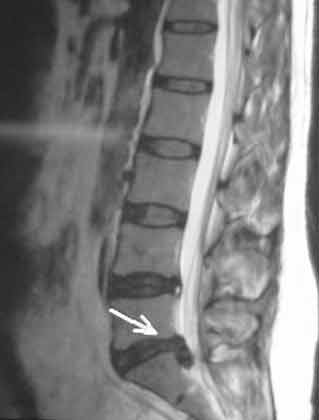
Hello, my name is Kambiz Hannani, and today I'm going to talk about disk herniations in the low back; first I'd like to start discussing the terminology itself here's a lumbar MRI we have the fifth fourth third second vertebrae the discs in between the vertebrae here we can see the spinal fluid coming down normal disc a little bit of a disc protrusion and now we can see a big disc herniation here coming in and pushing on the nerves in the area this herniations can be called the herniation extrusion bulge rupture essentially all meaning the same thing maybe different degrees of herniation fortunately disc herniations are common some of the risks risk factors that you may have include having a heavy stressful job with vibrations involved essentially smoking or being between the age of 30 and 50. Most of the patients that have this herniation end up having a lot of leg pain or symptoms like burning sensation usually worse with sitting you may have some numbness or weakness in the leg if the disc herniation is large enough it can actually cause bowel bladder or sexual problems in which case now we're looking at an emergent situation.
Occasionally disc herniations can disappear which is something people really wonder about those are usually the big discs that have left the disk space and are called sequestered disks usually patients do find we give them about four to six weeks medications occasionally some epidural steroid injections and therapy the less than maybe 20 or 30 percent of the patients who don't do very well with the conservative management may require a micro discectomy which is a smaller surgery going in and trying to get rid of that disc herniation that's coming through and pushing on the nerves.
Here's what a this surgery looks like or a micro disc we put a small incision on the skin either use tubes or a retractor to go down to the bony elements of the spine use a microscope take a little bit of the bone off that gives us access to the disc itself as we can see here and now we can use surgical instrument to just take off or shave off a little bit of the disc.
Like any other surgery this surgery has risks including infection bleeding nerve damage paralysis bowel bladder sexual problems medical complications including death occasionally patients may even get worse with the surgery requiring additional surgeries and occasionally fusions fortunately because because the disc surgery is relatively a smaller surgery in terms of spine surgeries the risks are also relatively smaller compared to the other surgeries that we do.
In summary these herniations are relatively uncommon usually cause a leg pain occasionally back pain most people get a lot better with some physical therapy and medications occasional steroid injections and if none of that works then a microdiscectomy is actually a reasonable option that can help patients who have a lot of pain.
Causes of neck and arm pain and the options.
Hello my name is Kambiz Hannani, and today I'm going to talk about neck and arm pain; the most common cause of neck pain as well as arm pain in the elderly population is neck arthritis which can be pinching the nerves as they come through their cervical spine; fortunately most people get better with a little bit of time some therapy perhaps some medications; occasionally we send patients for epidural steroid injections that can also help especially with people who are getting arm pain tingling numbness perhaps some weakness; the most concerning thing that can happen with people who have arthritis is possibly having some pressure put on their spinal cord which can be a combination of the bony spurs from the arthritis as well as disc herniations.
In these situations more emergent intervention would be necessary; here's an example of an MRI of the neck, and we can see that here's the spinal fluid, looks pretty nice down here, reasonably okay up here, but over here where the neck has a lot of arthritis we can see that there's some pressure coming over and tightening the area. The same thing is true when we look at a cervical x-ray; here we have the second third fourth fifth sixth seventh vertebrae; here the discs look okay, and then here we can see the discs have started to collapse; the spine is actually curved in correct way instead of being correctly curved this way, with the point being towards the front of the neck it has reversed its curvature.
This is the common arthritis that we see disc herniations in the neck are a bit more common in the younger people here we can see the spinal fluid again we can see the spinal cord and then there is a very large disc herniation here coming over and pushing on the spinal cord; the same kind of symptomatology is usually seen with the patients who end up having neck pain, perhaps some arm pain numbness tingling weakness in their arms; again the treatment is pretty conservative meaning we send patients for some therapy, may perhaps an injection or two, some medications; if none of that works and the patient continues to have symptoms then, we consider doing surgery.
The surgery that we usually perform is a fusion surgery; in this case, here's an example of again a cervical MRI; we can see this disc herniation coming over and touching the nerves; here the surgery that we have done; in this case is going in taking this disc out from the front putting a piece of bone in its place, and I'm putting a plate in the front; and we can see it here, the plate the piece of bone that we have put in there; we can see the same picture from the front where we see the head and the mouth and we can see the plate from the front view, and then from the side view; this is what a normal neck would have looked like before the plate would have been placed in.
Occasionally we go from the back of the neck instead of the front in which case we need to put in more instruments screws and rods etc; like any other surgery, neck surgery has risks that most common risks include infection, bleeding, nerve damage, paralysis, bowel bladder sexual problems; sometimes the pain may worsen requiring additional surgeries; you can, you may get medical complications uh for which you can get a heart attack perhaps blood clots or even death; although those are a bit less common in the neck, we need to also worry about the voice box; sometimes the voice can change people can have difficulty breathing and or eating or drinking; most of those do improve with time; however, so in summary, neck pain and arm pain is commonly caused by neck problems, meaning arthritis, disc herniation.
Most of the time, these kinds of problems go away with a little bit of time, some therapy, may perhaps some medications, injections; occasionally they don't or if people have problems with their bowel bladder function sexual function, walking ability, handwriting, what we call myelopathy; those are the cases that we really need to immediately pay attention to and actually go in and fix; there are risks involved and that's where we try to balance the risks versus the benefits.
A patient watches her own surgery live.
Before the surgery procedure my gosh, I was miserable. I had pain constant pain; I had to take sleeping pills to sleep, pain pills, and I still couldn't get any rest. So I was really miserable. My procedure went really well. I had a very good doctor, Dr. Hannani, and I was awake during the whole procedure. I felt no pain; I, they kept me amused; they kept talking with me, and I was really comfortable; and when it was all over, I went to recovery and that was great; that was it. I was in the hospital about three days and I came home. I had a walker and a brace and I did really well. Within about six weeks, I was moving around really great starting to do stuff in the house, and everything to proceed to change my life completely.
I feel great; I can do the things my husband and I used to, like doing like going out dancing, dinner long trips vacation, playing with the doggies, things we couldn't do before.
From the blog
 Nov 10, 2026Adjacent Segment Degeneration: What Happens Next to a Fusion?After a spinal fusion, the discs above and below can wear over time. Research helps explain how often this causes symptoms, and why motion-preserving disc replacement is an option for some patients.
 Oct 27, 2026Spine news: FDA approves another artificial neck disc for two-level useIn October 2026, the FDA approved two-level use of an artificial cervical disc that was previously approved for one level. Here is what that news means for people with neck and arm pain from worn or herniated discs.
 Sep 15, 2026Your MRI says "bulge" or "degeneration": does that mean you need surgery?Words like "disc bulge" and "degeneration" sound alarming, but research shows they are common in people with no pain at all. What matters is whether the findings match your symptoms and exam.
Free online MRI review
Two quick questions about where you’ll be and your coverage.
Upload the disc as a ZIP, the PDF report, phone photos, or an imaging-center link.
He looks at the actual images himself, not only the radiology report.
A complimentary telemedicine visit to explain what he sees and your options.
Awake endoscopic spine surgery
Through a scope about the width of a pencil, the herniated disc is removed under light sedation with local anesthesia, so you stay awake and can talk with Dr. Hannani during the procedure. Not everyone is a candidate; your MRI is the first step in finding out.
Returning patients
Already a patient of Dr. Hannani? Book a video follow-up by phone.
Call (626) 939-5900 to book an online follow-up (Monday afternoons).
Recognition
Locations & service area
Mon–Fri 9:00 AM–5:00 PM (closed 12–1)
626-939-5900 · Toll-free 877-412-3456
Fax 626-939-0211
FAQ
Yes. Dr. Hannani reviews your MRI and meets you in a complimentary video visit (15 minutes), once per patient, with no obligation. You must be in California during the visit.
Usually not. Most disc herniations, stenosis and arthritis improve with medications, physical therapy or injections. Only a small percentage of people end up having surgery.
Not everyone is, but the majority of Dr. Hannani’s surgical patients are treated with minimally invasive techniques. A full spine evaluation decides.
It is done under light sedation with local anesthesia, so you stay awake and can talk with Dr. Hannani during the procedure; patients usually go home the same day, often with immediate relief, and return to most daily activities quickly.
For office visits we accept most commercial and PPO plans, Medicare, workers’ compensation, work-injury and personal-injury cases. No insurance or coverage? We offer affordable payment plans. We suggest starting with the free MRI review, then calling (626) 939-5900 to verify your coverage before an office visit.
New loss of bladder or bowel control, numbness in the groin, or rapidly worsening weakness can be an emergency. Call 911 or go to the nearest emergency room. Do not use the online review for urgent symptoms.